
How to Run a Bowl-a-thon That Actually Makes Money
A bowl-a-thon is one of the easiest fundraisers to explain: people bowl, and your cause gets the money. It is also easy to fill every lane and still clear less than you hoped, because the ticket price was a guess and the sponsors were an afterthought.
This guide is for nonprofits, schools, churches and teams around Pittsburgh, and it runs in the order you'll need it, from the goal to the report afterward.
1. Start with the number
Set a net goal: the amount you want to keep after every cost. Then tie it to something specific. "New uniforms for the team" or "a month of meals" is easier to give to than "general support."
Your net comes from four places, minus your fixed costs:
- The margin on tickets or teams
- Sponsorships
- Raffles and extras
- Pledges and donations
If sponsorships cover your fixed costs, the margin on every ticket is profit. That's why well-run bowl-a-thons sell sponsors first.
2. Choose the date
- Give yourself 10 to 12 weeks. You need time to sell sponsors and build teams.
- Book the lanes first. At Zone 28, spring events get planned in the fall and off-peak dates work best, so ask for open dates before you print anything.
- Check your own calendar. Avoid school breaks, big games, holidays and other fundraisers your supporters already give to.
- Match the time to your crowd. Families with young kids want an afternoon or an early evening. If students are bowling, ask the venue about any evening age rules.
- Plan on two to three hours: enough for bowling, food and the raffle, and short enough to keep the energy up.
3. Price tickets or teams with a simple margin formula
Pricing is where bowl-a-thons quietly lose money. Work out the margin on one bowler first:
- Start with your ticket price.
- Subtract your venue cost per bowler: your lane cost divided by the bowlers on each lane.
- Subtract your food cost per bowler, if you add food.
- Subtract your giveaway cost per bowler, such as a shirt or a share of the prizes.
- What's left is your margin per bowler.
Then the rest is simple:
- Ticket net: your margin per bowler times the number of bowlers.
- Event net: your ticket net, plus sponsorships, extras and donations, minus fixed costs such as printing, prizes and fees.
- Break-even: your fixed costs divided by your margin per bowler. That's how many bowlers you need before you make anything.
Ask your venue to quote the lane cost and any per-person food cost separately, so both drop straight into the worksheet.
Three rules come straight out of the math:
- Fill every lane. If your venue prices by the lane, a full lane costs less per bowler than a half-empty one. Sell whole teams, and pair up single bowlers to fill the gaps. At Zone 28, a lane takes five or six bowlers.
- Food only makes money if the ticket rises by more than the food costs. If a meal adds a cost per bowler, raise the ticket by more than that, or the meal comes straight out of your margin. Run the worksheet twice, once for a bowl-only ticket and once for bowl-and-food, and compare.
- Price teams as a bundle. A team price is your ticket price times the bowlers on a lane. Team captains are your best salespeople, so give each one a goal and a sign-up link.
4. Build sponsor packages
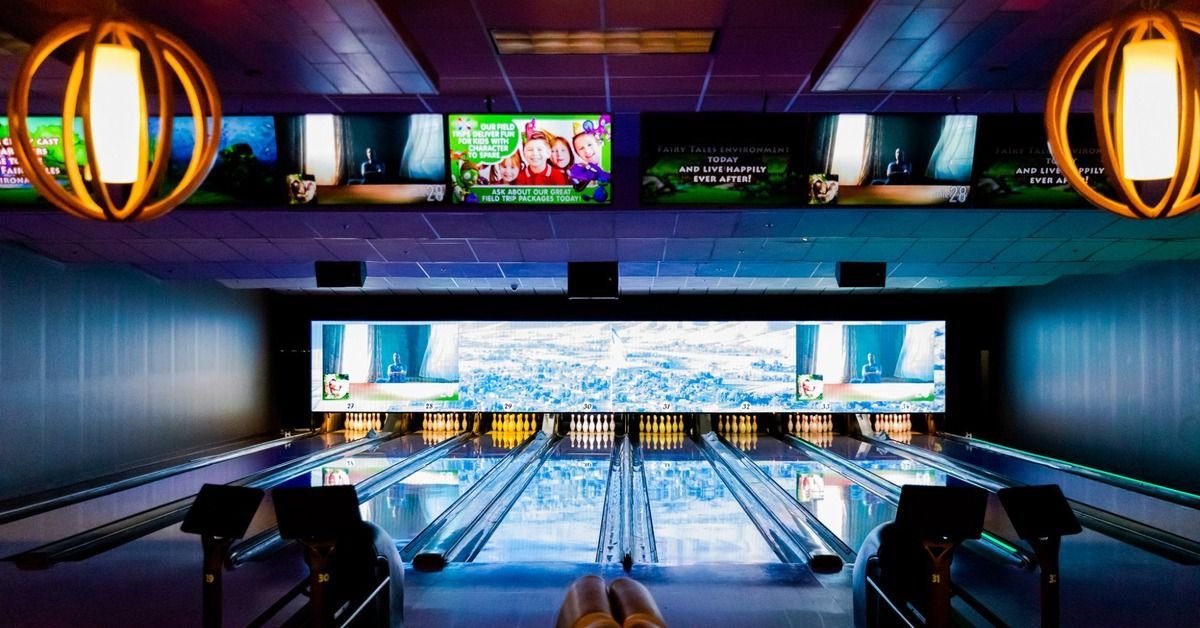
Lane sponsorships are where bowl-a-thons make their money. At Zone 28, sponsor logos go on the screens above the lanes at no charge, so every sponsor has its name over a lane for the whole event.
Build three or four levels:
- Presenting sponsor (one): name in the event title, logo on every screen and on the banner, and thanks from the microphone.
- Lane sponsors (one per lane): a logo over their lane for the whole event and a shout-out.
- Supporting sponsors: name on a poster and in your posts, a good fit for small businesses and families.
- In-kind sponsors: raffle prizes, printing or shirts, credited like cash sponsors.
To sell them:
- Count your lanes. That's your lane sponsor inventory.
- Start with businesses whose customers are your bowlers: parents' employers, the local pizza shop, the dentist half the school uses.
- Ask in person or by phone, with a one-page sponsor sheet.
- Collect logos early, and ask the venue what file format the screens need.
- Photograph each logo over its lane. Send the photo with your thank-you. It's how you sell the sponsorship again next year.
5. Pledges or entry fees?
- Entry fees are simple and predictable, and the money is in before the day.
- Pledges let bowlers raise money from friends and family, which can bring in far more than a ticket. Per-pin pledges sound fun but are hard to predict and harder to collect afterward. Flat pledges, collected online before the event, are much easier.
- A hybrid often works best: an entry fee that covers your costs, plus a fundraising goal for each bowler or team, with prizes for the top fundraisers.
6. Add raffles and extras
Extras raise money without raising the ticket price:
- A 50/50 drawing or a basket raffle with donated prizes
- Mulligans: pay to re-bowl a bad frame
- Beat the pro: pay to take on your best bowler, the principal or the pastor
- Challenge frames: donors pay to make a team bowl a frame with the other hand
- Prizes for best team name and best team shirts
- Event T-shirts with sponsor logos, priced above cost
In Pennsylvania, raffles and 50/50 drawings are regulated as small games of chance, and most organizations need a license from their county treasurer before they run one. Check the rules early, and ask the venue whether drawings are allowed on site.
At Zone 28, laser tag and 88+ arcade games are under the same roof, which gives younger siblings and non-bowlers something to do.
7. Promote it on a timeline
- 10 to 12 weeks out: book the date and lanes, set the goal and write the sponsor sheet.
- 8 weeks out: start the sponsor asks, open registration and send a save-the-date to your email list, bulletin or newsletter.
- 6 weeks out: recruit team captains, put up flyers and start posting.
- 4 weeks out: hit your sponsor logo deadline, collect raffle prizes and have any raffle license in hand.
- 2 weeks out: last call for teams, pledge reminders and volunteer jobs assigned.
- 1 week out: give the venue your final count and the logos, and set the lane assignments.
- The day before: pack the kit: cash box, card reader, check-in list, raffle tickets, pens, tape, banner and prizes.
8. Run the day from a run sheet
A sample for a three-hour event:
- An hour before: set up check-in, the raffle table and the banner, and check the sponsor logos on the lane screens with the venue team.
- 30 minutes before: brief the volunteers and post the lane assignments.
- Start: check in bowlers and collect any remaining entry fees and pledges.
- Soon after: a two-minute welcome covering the goal, what it pays for and the sponsors by name. Then bowl.
- Halfway: food, a raffle push and a progress update against the goal.
- The last 30 minutes: drawings and prizes for high game, low game, best team name and top fundraiser.
- Close: a group photo, one more thank-you to the sponsors, and the total raised or a first estimate.
- After: two people count the money together and record it before anyone leaves.
9. Thank-yous and reporting
- Within 48 hours: thank bowlers, donors and volunteers, with the amount raised and what it will pay for.
- Within a week: send sponsors their photo and a thank-you letter. A ticket that includes bowling or food is partly a purchase, so check IRS Publication 1771 on donor acknowledgments, or ask your accountant.
- Within a month: give your board or committee a one-page report: gross, costs, net, net per bowler, sponsor total and what to change.
- Before you leave the building: ask about next year's date.
Where Zone 28 fits
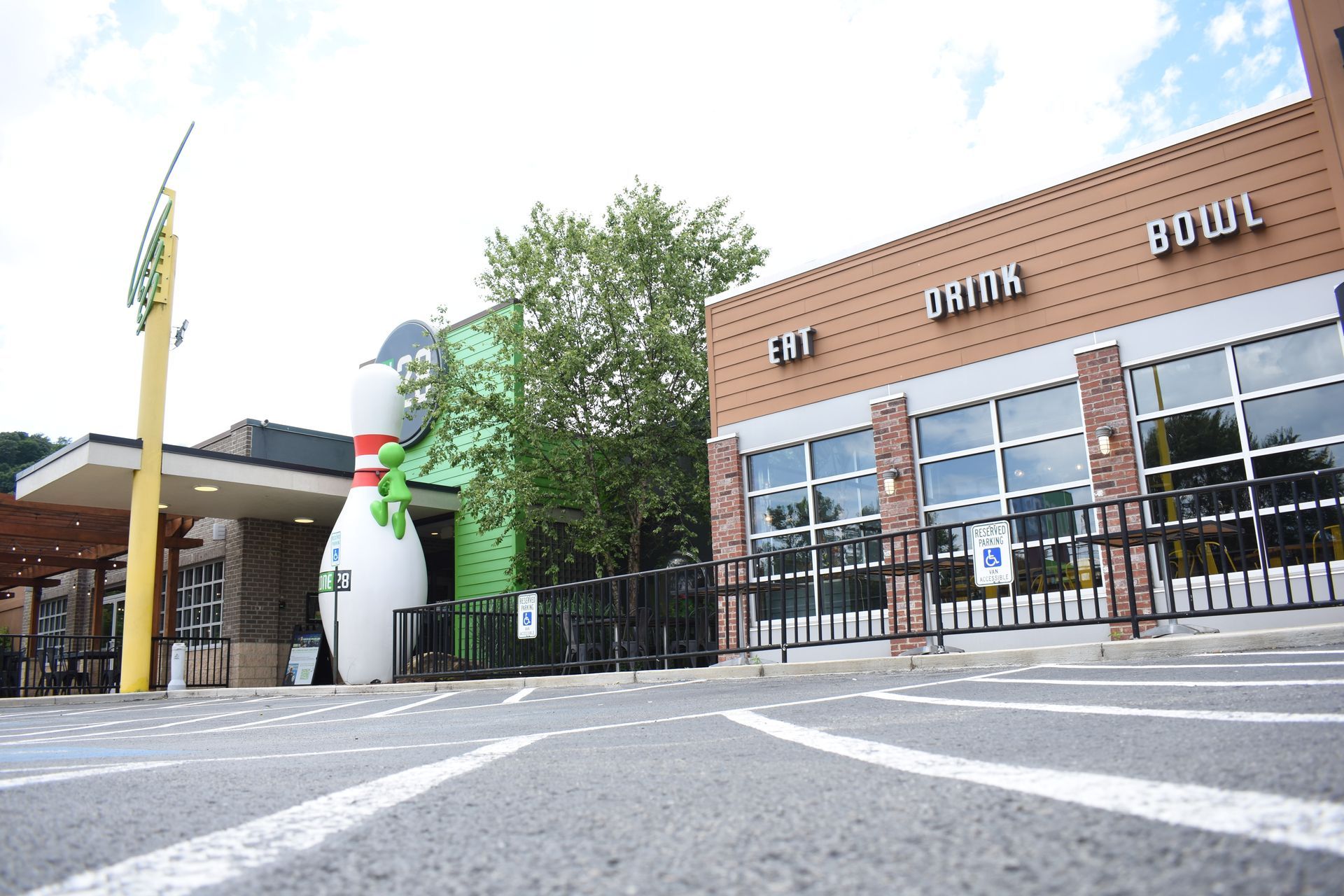
Zone 28 hosts bowl-a-thon fundraisers in Pittsburgh, 15 minutes from downtown via Route 28 and 2 minutes from the PA Turnpike. You sell the spots or teams and keep what you collect.
- 33 lanes in one building, five or six bowlers to a lane.
- Shoes are included.
- Sponsor logos go on the screens above the lanes at no charge.
- A pizza buffet from our own kitchen, with all-you-can-eat pizza, salad, breadsticks and soft drinks, makes it a full night. Run the food rule above before you add it.
- Everyone can get around: ramps join the two levels, there are bowling ramps at the lanes, and the laser tag arena and restrooms are wheelchair accessible.
- Our events team plans it with you, from the date to the sponsor screens.
Planning something other than a fundraiser? See all our group packages. To ask about open dates, call 412-828-1100 and ask for group sales, or use the form on the bowl-a-thon fundraisers page.
Frequently asked questions
How much can a bowl-a-thon raise?
It depends less on how many people bowl than on your margin per bowler and your sponsors. Run the worksheet above with your venue's quote before you set a ticket price.
How many bowlers go on a lane?
Five or six at Zone 28. If your venue prices by the lane, a full lane keeps your cost per bowler down.
Should we charge an entry fee or collect pledges?
Often both: an entry fee that covers your costs, plus a fundraising goal for each bowler or team, collected online before the day.
How far ahead should we plan?
Give yourself 10 to 12 weeks. For a spring event, start in the fall, which is when spring bowl-a-thons get planned.
Do bowlers need their own shoes?
Not at Zone 28. Shoes are included.
Can our sponsors be shown on the lanes?
Yes, at Zone 28. Sponsor logos go on the screens above the lanes at no charge, so each sponsor has its name over a lane for the whole event.